
Define the operating question
State the water source, industrial wastewater PAC testing and candidate comparison, target measurement and downstream separation step.
A product name alone cannot define a responsible treatment recommendation.
Characterize representative water
Record turbidity, color or target contaminant, alkalinity, pH, temperature and credible variability.
Use actual operating water rather than one convenient synthetic sample.
Normalize product and dose
Compare candidates on the same active aluminum or Al2O3 basis and document stock preparation.
Neat product units can hide differences between liquid and powder grades.
Reproduce mixing and time
Keep addition order, rapid mix, flocculation energy and settling time consistent.
A strong beaker result obtained with unrealistic mixing may not scale to the plant.
Measure the complete result
Track settled turbidity, pH, floc behavior and the application-specific analytical target.
Include sludge or filtration consequences where they control operating cost.
Release a bounded window
Link water, product code, lot, dose basis, mixing, measurements, COA, SDS and quotation.
Revalidate meaningful water, process or supplied-product changes.
Diagnose failure modes
Separate raw-water change, product identity, pump delivery, pH, rapid mixing, floc breakage and clarification loading.
Change one factor at a time when operations allow and preserve the baseline.
Close the purchasing record
State sample and trial quantity, monthly demand, packaging, destination, document needs and receiving checks.
The approved sample and production supply must remain traceable.
Match PAC to the wastewater process
Define the industrial wastewater by process source and treatment objective before selecting PAC. Composite wastewater can hide the stream that controls chemical demand, so record sampling point, production state, pH, suspended solids, color, oil or the target contaminant and any upstream chemicals. Preserve and mix the sample consistently before dividing jars.
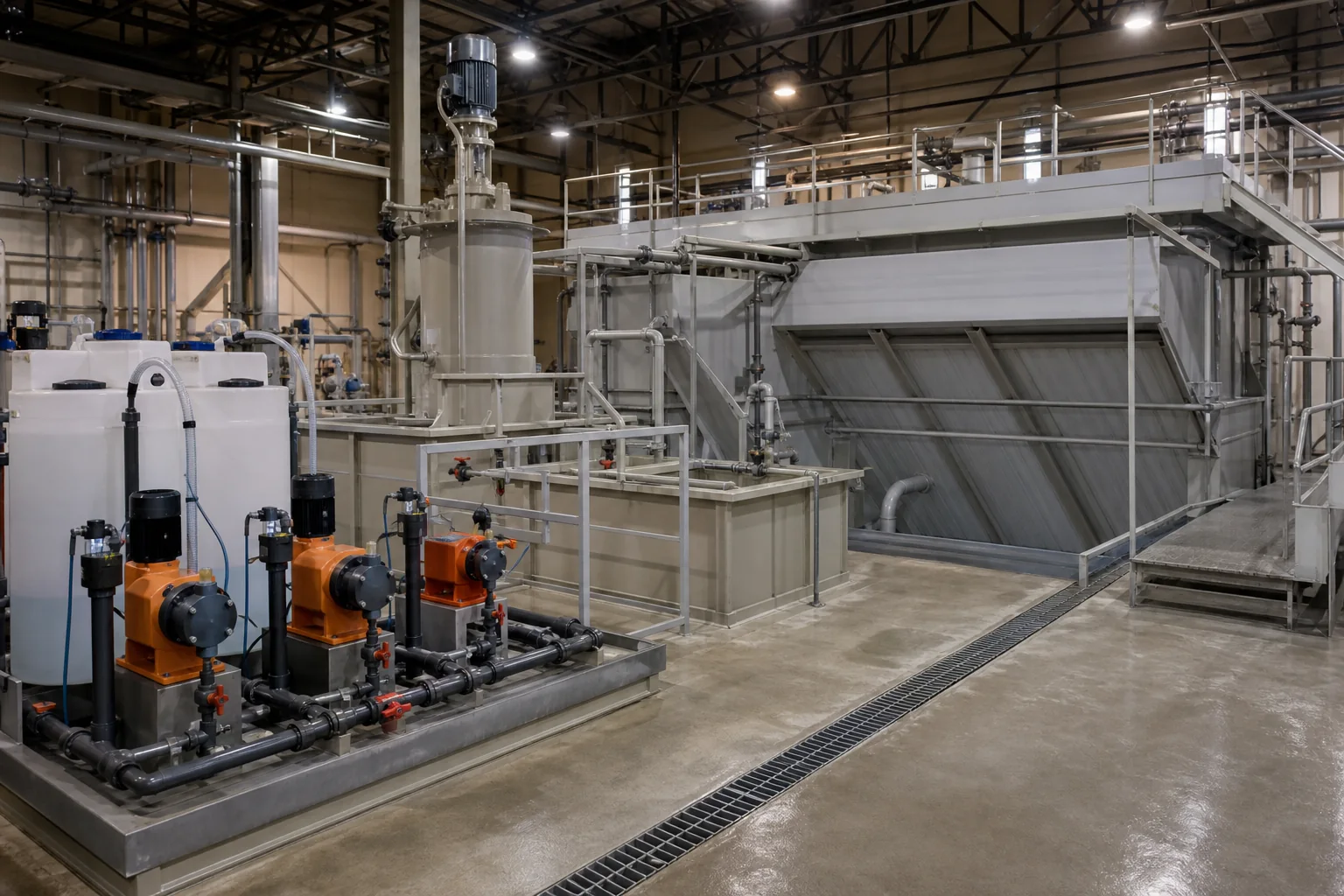
Test PAC as part of the real chemical sequence. When acid, alkali, coagulant aid or polymer is used, hold addition order and contact time constant. Run a blank, the current program and coded PAC candidates on a stated active basis. Evaluate rapid mix, flocculation and the actual separator route—settling, lamella clarification or DAF—because a floc that settles well may not be ideal for flotation.
Rank the candidates with measured treated-water results and downstream consequences. Include sludge volume, dewatering, filter loading or biological-treatment response when they influence total cost. If the wastewater changes with production grade, cleaning cycle or batch discharge, test those credible conditions separately rather than averaging them into one misleading result.
For field confirmation, establish a stable baseline and calibrated dose, then sample before dosing, after mixing and after separation. Define stop conditions and preserve upstream production notes. The approved result should identify the wastewater condition, PAC sample and lot, dose and pH window, chemical sequence, separator loading, analytical methods and commercial supply basis.
Where production is batch-based, create separate acceptance windows for materially different waste streams instead of one nominal average. Note cleaning chemicals, oil releases, metal finishing baths or other events that alter demand. A practical program may use a primary setpoint with defined jar-test triggers. Connect those triggers to operators who can identify the production event and to laboratory staff who can confirm the water response.