
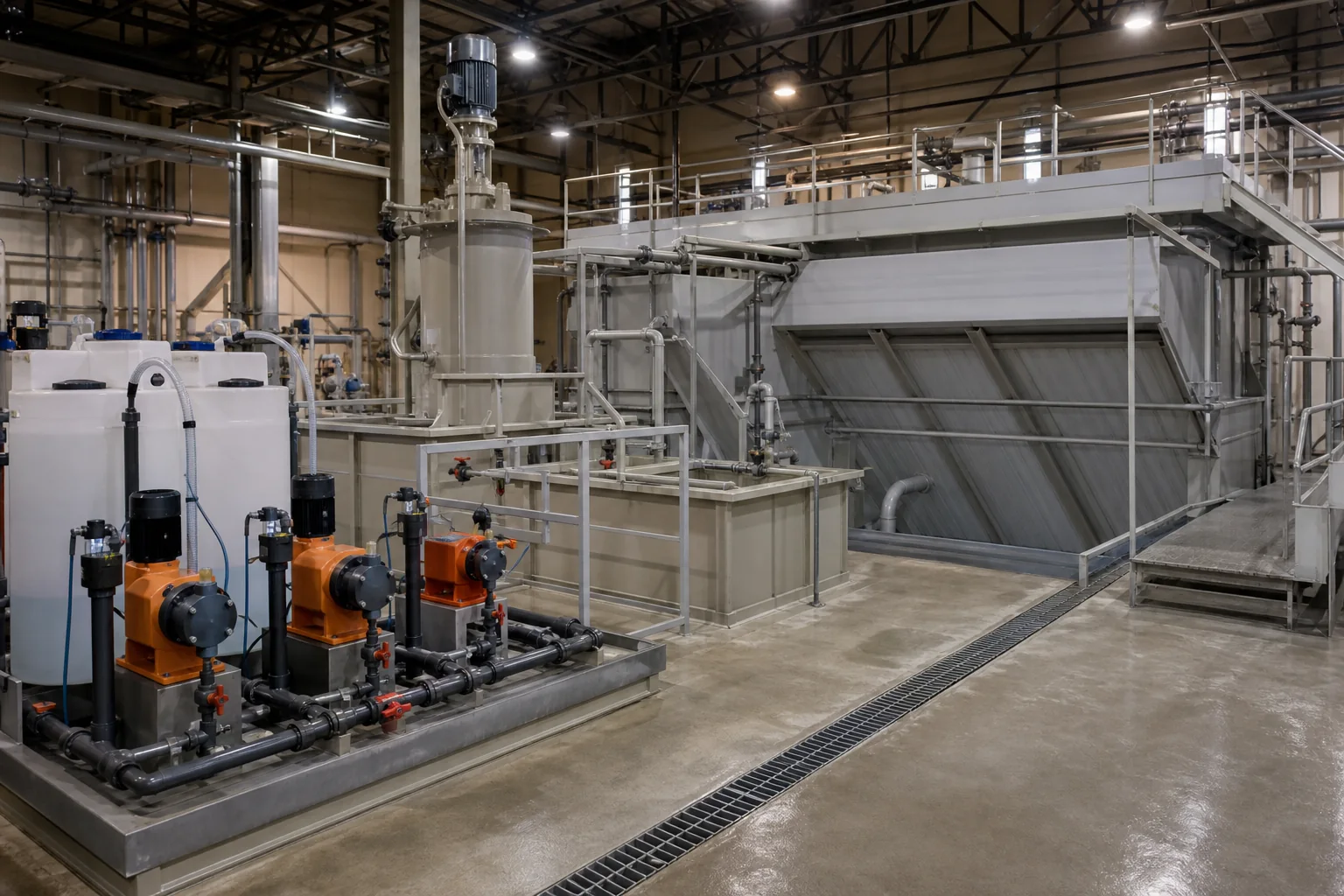
Separate wastewater treatment from wet-end addition
A purchase request for paper-mill effluent PAC should identify the wastewater stage, not simply the paper industry. Clarification, DAF, tertiary color treatment and a paper-machine wet-end program are different duties. An approval for one should not be transferred automatically to another.
Describe the wastewater source, furnish changes, coated broke, cleaning discharges and current chemical program. Use the industrial PAC evaluation as the starting method and state the actual process objective.
Keep particulate and soluble measurements distinct
Fibers, fines, fillers, color and dissolved organic load can behave differently during treatment. Measure suspended solids, turbidity, color or COD according to the chosen method rather than assume removal of one proves removal of the others.
Record sample preparation and whether a reported result represents total or filtered material where that distinction matters. A clearer supernatant can coexist with a substantial soluble load. Preserve the laboratory evidence needed by the downstream process team.
Test representative production conditions
Use samples covering normal operation and a credible change in paper grade, coating or cleaning program. Record sampling time, pH, alkalinity, temperature and visible solids. Avoid allowing large fibers or settled matter to disappear from the test without documenting the sampling procedure.
Compare the current coagulant and coded candidates on declared product and aluminum bases. Reproduce any pH correction, flocculant and addition sequence with matched rapid mix and flocculation. A different sample-handling method can create a false supplier ranking.
Match the separator and recovered solids route
Clarifier settling and DAF float behaviour require different evidence. Record the actual separation method, residence and carryover criteria. Include sludge or float volume, drainage and relevant dewatering observations instead of choosing the largest floc in a beaker.
If recovered material returns to another process or downstream biological treatment is sensitive to changes, ask the responsible team to define additional acceptance measurements. The water result alone does not establish full-system suitability.
Build a treatment-based cost comparison
Use verified PAC and any aid consumption with scoped delivered prices. Include justified pH-control, preparation and solids-handling costs. Do not attribute a production-related improvement to a new coagulant unless the baseline and comparison conditions are sufficiently stable.
The treated-volume cost framework keeps unit price in context. Preserve the accepted sample identity, assay and basicity so repeat supply refers to the material that was evaluated.
Request a mill-specific trial offer
Send source-stream information, production variability, current program, separator details, analytical targets, trial quantity and destination. Ask for a limited candidate panel and a documented field-trial scope before a large order.
Use the paper-effluent PAC enquiry. Qualify the offered grade for the stated wastewater boundary rather than accept a general paper-industry label or promise of universal COD, color or solids removal.
Write a mill-stream comparison sheet
Record paper grade or production state, sampled stream, fiber or filler context, color method, solids result and any measured soluble load. Keep PAC, aid and correction doses separate in the trial record.
Use this sheet to distinguish an altered furnish or cleaning event from a supply change. A later order can retain the accepted chemistry while still requiring a targeted test for a newly introduced stream or downstream treatment objective.