
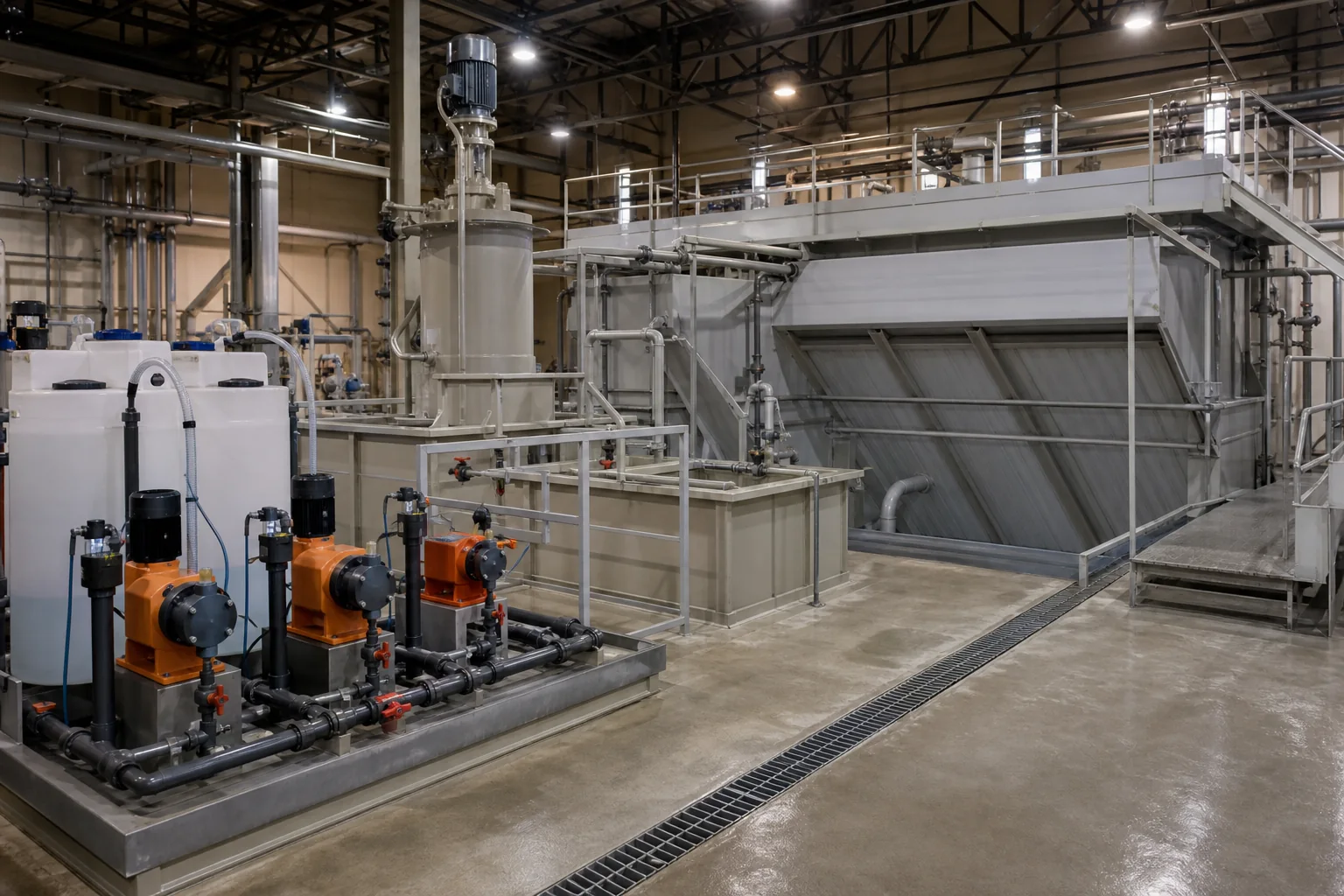
Describe the industrial duty precisely
Industrial-grade PAC is not a single treatment specification. Name the wastewater source, production state, separator, target measurement and downstream use. A grade accepted for one clarification process may not suit a different effluent or reuse requirement even when the trade description is identical.
Use the industrial PAC test guide to define the evaluation. Distinguish coagulation of particles or colloidal material from removal of dissolved constituents that the proposed treatment may not address.
Choose quality attributes for a reason
Request declared Al2O3 content, basicity, applicable impurity information and insoluble matter where these affect the duty or equipment. Specify methods and units. Avoid turning an arbitrary powder color into an acceptance criterion unless the buyer has an evidence-based reason for doing so.
Appearance can help detect a change from the accepted reference but cannot independently establish chemical purity or performance. If a supplier offers a different material source or formulation, evaluate the complete specification and treatment evidence rather than approve it solely because the powder looks familiar.
Test the relevant production conditions
Sample normal operation and credible difficult batches such as cleaning discharges or changes in raw materials. Record pH, alkalinity, suspended solids, oil, color or the actual target. Mix and preserve samples consistently, and note any settling or aging before splitting jars.
Compare the incumbent and coded candidates with matched preparation, final pH, mixing and separation. Do not average distinct streams into one convenient sample if doing so conceals the wastewater that controls consumption or downstream risk.
Include sludge and the next process
Measure clarified or floated water and the solids stream. Sludge volume, dewatering, carryover, filter load or biological-treatment response can change the economic outcome. A lower price per tonne does not establish a lower cost per accepted discharge or reuse volume.
Let the responsible process team define analytical methods and release limits. A jar-test improvement does not establish compliance with a permit or suitability for a sensitive downstream operation. Record what has and has not been demonstrated.
Check preparation and receiving capability
For powder, verify dissolution, residue and practical make-down concentration. For liquid, check storage, transfer, density and pump calibration using current guidance. Confirm product code, lot documents and handling instructions before receiving the trial quantity.
The quality and supply record should define how suspect material is segregated and reviewed. A satisfactory laboratory candidate can still be unsuitable if its preparation or packaging cannot be handled by the plant.
Request a bounded industrial offer
Send process description, representative analyses, current program, acceptance method, sample and trial quantities, packing and destination. Ask the supplier to connect the offered code and specification to the screened material, including any stated limitations.
Use the industrial PAC quotation brief. Select on documented treatment and supply value rather than a claim that every industrial grade is interchangeable or that a low product price guarantees a low operating cost.
Keep a production-event sample register
Associate each accepted wastewater result with the production batch, cleaning state and sample collection conditions. Note which events were not represented so purchasing does not interpret one successful comparison as coverage of every industrial discharge.
Connect the register to the grade and operating window. When a new raw material or cleaning chemical is introduced, the laboratory can identify the relevant gap instead of either blaming the supplier immediately or increasing consumption without a diagnosis. Use the textile effluent trial or paper-mill effluent evaluation for those specific process questions.