
Preserve the identity that passed evaluation
Keep the approved sample code, formulation, form, water envelope and treatment report with the purchase order. Record whether approval came from laboratory screening or included a plant trial. A broad PAC description does not establish that the first shipment matches the material evaluated.
The troubleshooting approach helps distinguish a genuine supply discrepancy from a changed process condition. Do not assign every weak result to the lot without checking water and delivery.
Inspect shipment and document agreement
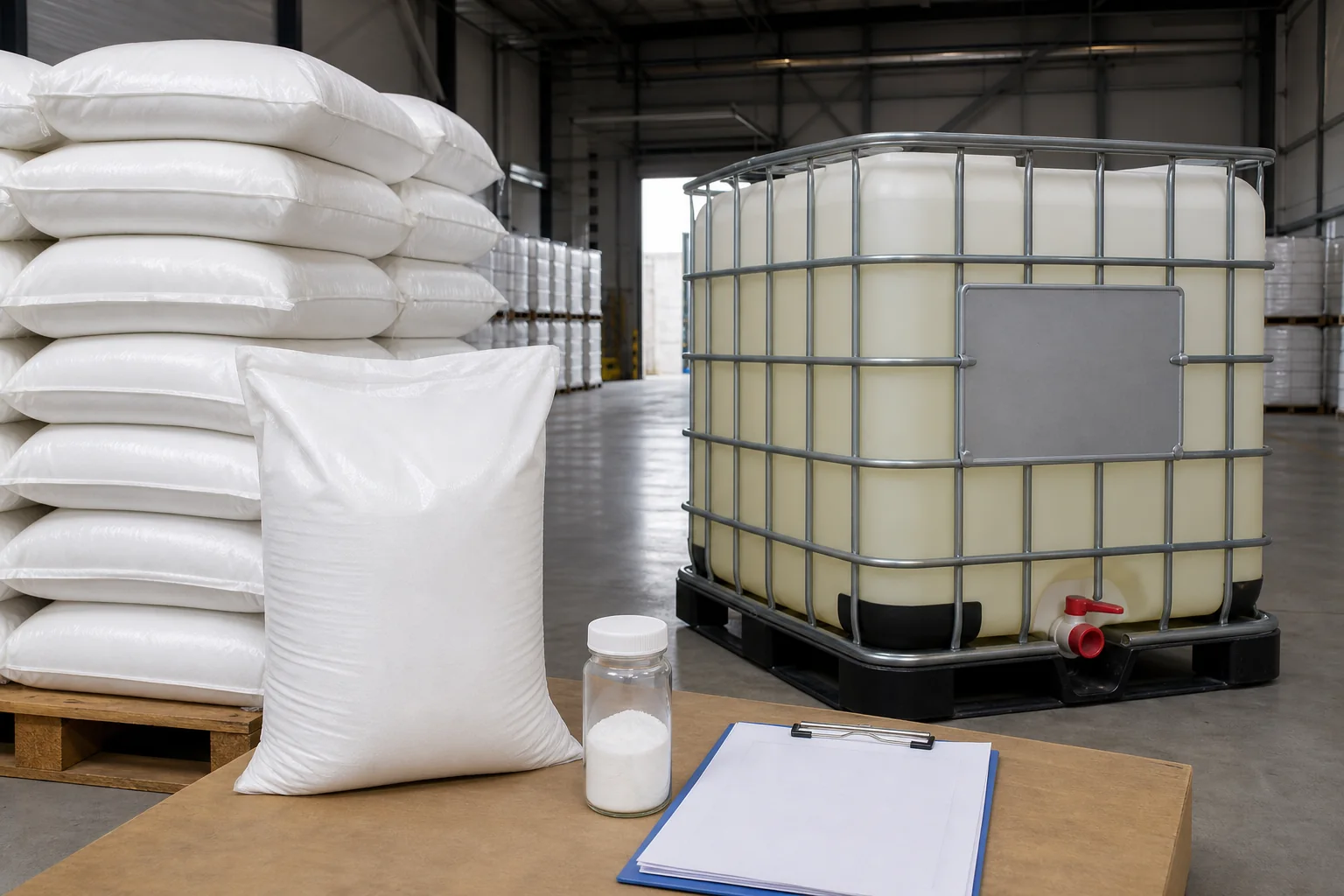
Match product code, lot, quantity, package markings and physical condition to the order and packing record. Review the applicable COA and SDS. Hold mismatched or damaged material under the receiving procedure before it becomes inseparable from accepted stock.
Identify which COA values were measured for the lot and which are specification or typical information. Resolve ambiguous units or missing methods before acceptance. A visually polished certificate cannot compensate for an untraceable material identity.
Check analytical results on the agreed basis
Compare Al2O3 or elemental aluminum assay, basicity and other agreed attributes using the specified methods. Solution pH and insoluble-matter results require defined preparation conditions to be interpretable. A result collected by a different method may require clarification rather than immediate rejection.
The assay specification guide provides the basis controls. Do not treat equal aluminum content as proof of complete formulation equivalence or a substitute for application performance.
Repeat preparation and a reference test
Prepare the incoming material according to the accepted procedure and include a suitable retained reference where available. Use matched water, temperature, dose basis and mixing. For liquid feed, verify density and pump output; for powder, check make-down and relevant residue observations.
A retained sample can also change during storage, so record its condition and limitations. Preserve raw observations and repeat a decisive discrepancy before assigning a cause. Use the agreed treatment measurement rather than appearance alone.
Investigate and release proportionately
Review changed water, pH, upstream chemicals, calibration, sample history and separator conditions alongside lot information. Separate analytical nonconformance, handling damage and performance outside the approved envelope. They may require different corrective actions.
Define who may release, conditionally accept, retest or reject the material. Keep suspect stock identifiable during review and retain the relevant records. Avoid blending an uncertain lot into good material as an improvised way to eliminate the discrepancy.
Close the repeat-supply control
Record the lot decision, methods, results, reviewer and any limitations. Connect formulation or specification changes to a requalification requirement. A successful first-lot check should establish a reproducible receiving method rather than end the need for traceability.
Send the approved identity, receiving evidence and any observed difference through the PAC quality enquiry. The objective is a factual resolution, not a presumption that a matching trade name guarantees performance in every future water condition.
Create a receiving decision trail
Attach the sampling record, relevant COA pages, preparation observations, reference-test result and reviewer decision to the actual incoming lot. Record any accepted analytical deviation with the applicable method and reason.
Keep material held, released or rejected distinguishable in the inventory system. This prevents a later repeat order from inheriting an informal approval and allows a supplier investigation to work from identifiable samples rather than an uncertain warehouse history.