
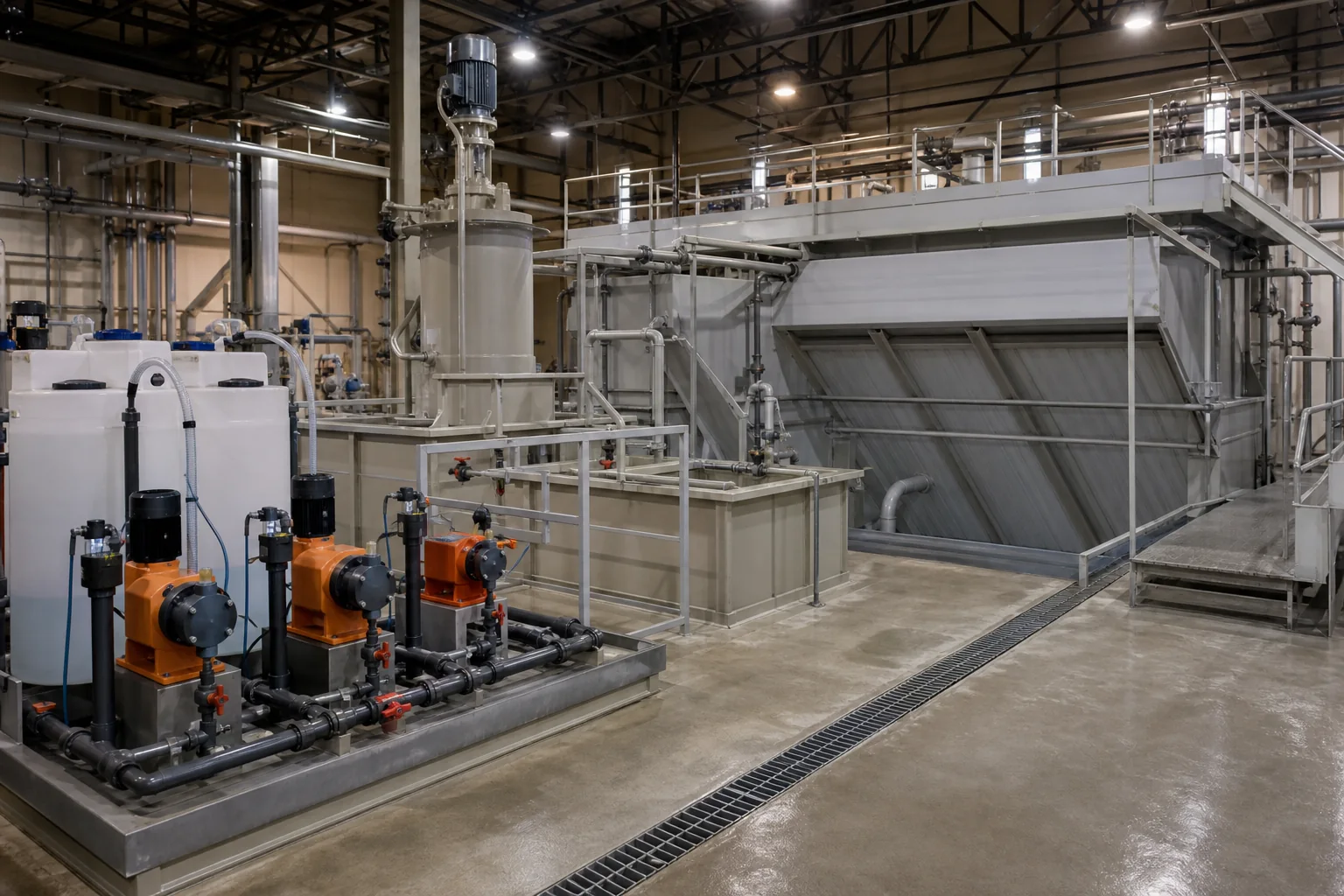
Define the operating question
State the water source, PAC performance troubleshooting, target measurement and downstream separation step.
A product name alone cannot define a responsible treatment recommendation.
Characterize representative water
Record turbidity, color or target contaminant, alkalinity, pH, temperature and credible variability.
Use actual operating water rather than one convenient synthetic sample.
Normalize product and dose
Compare candidates on the same active aluminum or Al2O3 basis and document stock preparation.
Neat product units can hide differences between liquid and powder grades.
Reproduce mixing and time
Keep addition order, rapid mix, flocculation energy and settling time consistent.
A strong beaker result obtained with unrealistic mixing may not scale to the plant.
Measure the complete result
Track settled turbidity, pH, floc behavior and the application-specific analytical target.
Include sludge or filtration consequences where they control operating cost.
Release a bounded window
Link water, product code, lot, dose basis, mixing, measurements, COA, SDS and quotation.
Revalidate meaningful water, process or supplied-product changes.
Diagnose failure modes
Separate raw-water change, product identity, pump delivery, pH, rapid mixing, floc breakage and clarification loading.
Change one factor at a time when operations allow and preserve the baseline.
Close the purchasing record
State sample and trial quantity, monthly demand, packaging, destination, document needs and receiving checks.
The approved sample and production supply must remain traceable.
Isolate chemistry, feed and hydraulic causes
Start troubleshooting by confirming what changed. Compare current raw-water analysis, flow, temperature, pH and solids load with the last accepted operating window. Check the PAC product code, lot, appearance and storage condition against the receiving record. A coincident water or production change can otherwise be mistaken for a supplier problem.
Verify delivery before changing dosage. Check tank level movement, product density or stock concentration, pump calibration, blocked lines, dilution water, valves and the injection point. Observe rapid mixing and flocculation hydraulics. Weak floc can result from underfeed, poor dispersion or insufficient collision; broken floc can point to excessive downstream shear or recirculation.
Use a short diagnostic jar-test matrix with an untreated blank, retained accepted sample if available, current product and controlled dose or pH changes. Change one factor at a time. Measure final pH and the treated-water target, and record settling or flotation response. This separates raw-water demand, chemistry, preparation and equipment causes more reliably than an immediate large dose increase.
Document the correction and verify it at the process outlet and downstream filter or biological stage. If product identity, water source, chemical sequence or major equipment has changed, repeat the formal acceptance test. Keep the abnormal sample, lot documents and calibration record until the investigation closes. A troubleshooting result should restore a defined operating window, not merely produce one improved grab sample.
Use a time-stamped fault log that combines water data, product lot, pump setting, flow, mixer condition and treated result. This prevents separate teams from optimizing different snapshots of the same event. After recovery, identify one leading cause and supporting evidence, then define a prevention check. If the cause remains uncertain, record that uncertainty rather than converting a temporary improvement into an unsupported product conclusion.