
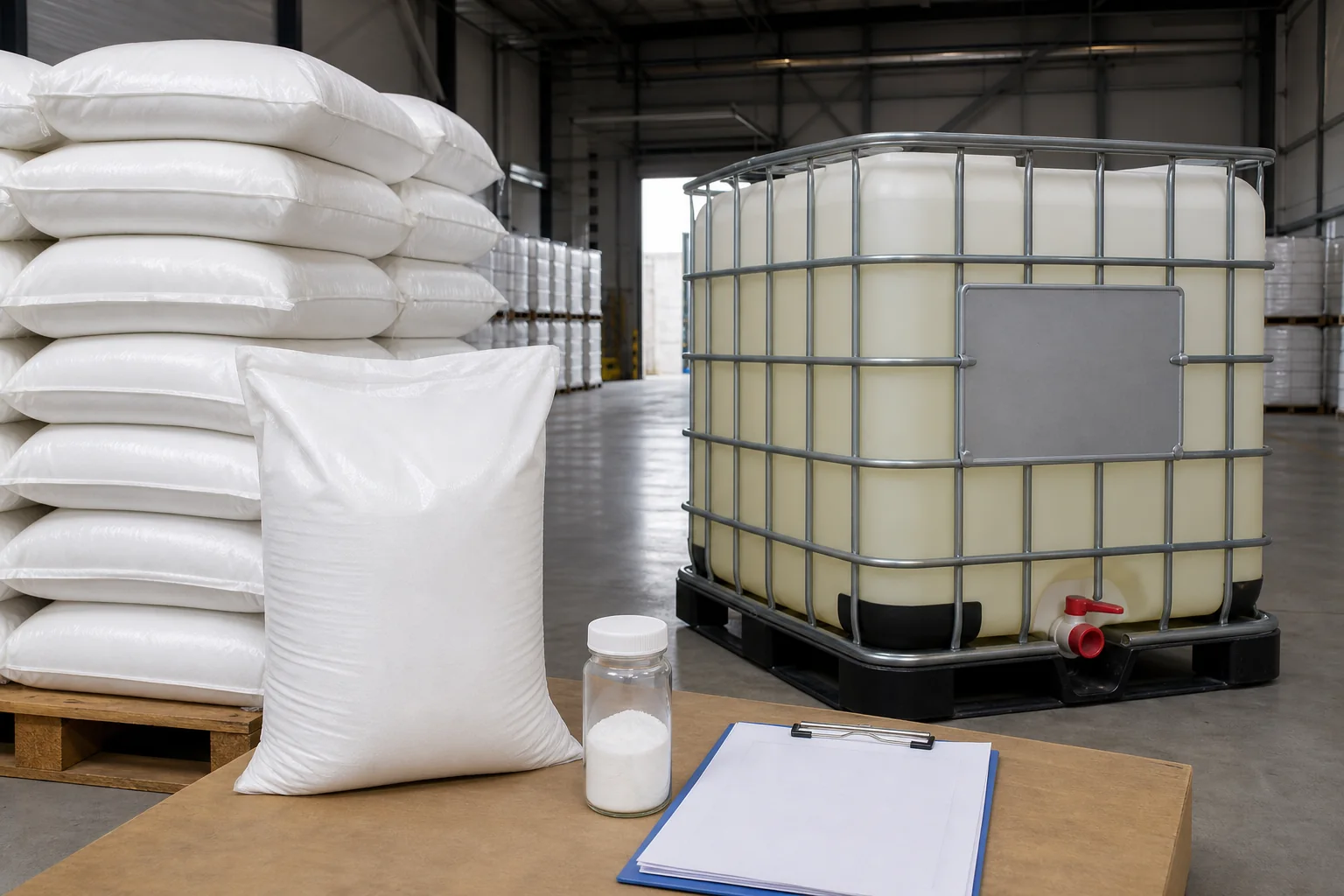
Choose the pack around the operation
Confirm which package formats are actually offered for the proposed liquid or powder PAC grade. State net quantity, dimensions, unloading equipment and sampling needs. A cheaper package can create extra handling, contamination or unusable residue if it does not fit the receiving arrangement.
The supply and receiving review should preserve grade and lot visibility. This checklist does not assert availability of a standard bag weight, tote size or bulk delivery arrangement.
Check liquid containment and transfer
Review current product instructions and SDS with the responsible equipment and safety teams. Confirm tank, liner, fittings, transfer and metering suitability for the exact formulation. Do not assume every liquid PAC has identical density, storage behaviour or wetted-material compatibility.
Plan segregation during a grade change and define what happens to remaining incumbent stock. Avoid mixing alternate or suspect materials in a shared tank before their identity and compatibility have been reviewed.
Protect powder and make-down quality
Specify bag closure, liner, pallet and wrapping appropriate to the agreed route and storage conditions. Plan dry handling, damaged-bag quarantine and safe access to the feeder or make-down tank. Moisture exposure can affect usable stock and preparation.
Follow grade-specific dissolution guidance and record solution concentration and preparation water. A nominal high-content powder may have poor practical value if the plant cannot prepare it reliably. Opened bags and prepared solutions need their own operating controls.
Request the actual storage conditions
Ask for written guidance covering the offered grade, unopened package and intended environment, with manufacturing or receipt-date basis where applicable. Do not assign a universal shelf life from a generic PAC description. Different formulations and exposures can require different review.
Record excursions, abnormal appearance, damaged seals or moisture ingress and obtain product-specific advice before release. Do not assume heating, recirculation or blending can repair uncertain material. Any remedy must follow the responsible technical and safety review.
Match inventory to accepted demand
Forecast use from realistic water volume, demonstrated consumption and trial status. Keep a planning estimate separate from a binding bulk release. Large discounts can be offset by storage limits, schedule changes and remaining stock after a treatment-program revision.
Include packaging losses, unloading, disposal or return arrangements and local handling in the cost comparison. Do not assume every container can be reused, recycled or disposed of through the same route; follow applicable product and receiving requirements.
Approve the delivery plan before purchase
Verify markings, lot segregation, unloading and feed compatibility on the trial delivery where feasible. State document deadlines and the authority for handling deviations. A package and storage plan is part of supply qualification, not an afterthought once the shipment arrives.
Send pack preference, storage environment, equipment, use schedule and destination through the PAC packaging enquiry. Keep the accepted plan with the grade identity so repeat supply remains practical and traceable.
Reconcile stock before each call-off
Compare remaining released material, held lots, forecast consumption and available storage with the proposed delivery quantity. Identify whether a delayed trial or changed treatment program has altered the original demand estimate.
Keep package and lot details with stock movements, including opened bags or partially used liquid containers. A reliable call-off plan should reflect usable approved inventory, not count every nominal kilogram in the warehouse as interchangeable treatment capacity.