
Establish who is responsible for supply
Identify the legal entity offering the PAC and its role as manufacturer, exporter or distributor. Ask who controls the proposed formulation, releases production lots and investigates nonconformance. A broad chemical catalogue does not establish manufacturing capability or suitability for the buyer's water.
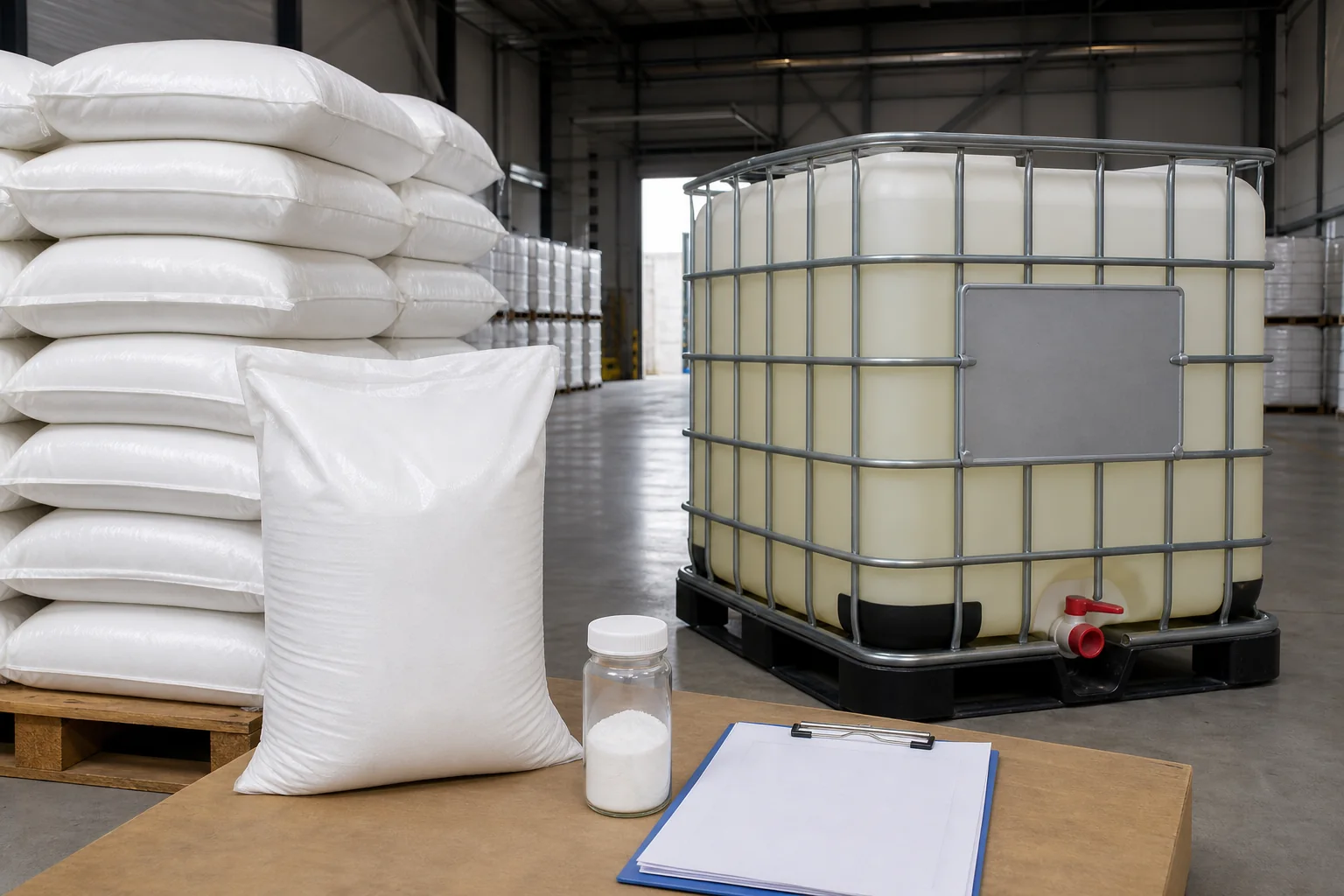
Do not infer production capacity, certifications or an independent laboratory from promotional photographs. The supplier RFQ guide should request evidence tied to the actual offered product and duty.
Compare clearly identified candidates
Request sample codes linked to grade, form, lot and applicable concentration and basicity information. Record whether the sample represents routine supply, a development proposal or a special preparation. Keep enough reference material for a repeat comparison where practical.
Use matched water and a current-product reference. A supplier unable to connect a successful sample to repeat supply has not resolved the purchasing question, even when the first jar-test result is attractive.
Examine methods behind the specification
Check assay basis, basicity method, pH preparation and insoluble-matter procedure where relevant. A high percentage without a reporting basis may be commercially misleading rather than technically demanding. Clarify whether COA figures are measured lot results, typical properties or specification limits.
Ask how a proposed specification or formulation change is communicated before shipment. Similar product names are not proof of interchangeability. Product identity and change control should remain visible to both the laboratory and purchasing team.
Request evidence for the intended application
Ask for test conditions, not just a removal percentage. Useful data identifies raw water, product dose, final pH, mixing, separation time and target measurement. Treat supplier results as screening information unless they reproduce the buyer's acceptance method and conditions.
For potable use, verify the required product-specific eligibility separately. The drinking-water qualification checklist avoids confusing treatment performance with documentary approval or a company-level marketing claim.
Use trial supply to check the relationship
Review technical response quality, sample labelling, quotation completeness, packing and document timing. A limited trial order can reveal whether the delivery identity and COA match the approved sample. Agree who can authorize a deviation before material arrives.
Confirm that packaging suits unloading, storage and feed equipment. A qualified chemistry without a workable delivery arrangement may not be a qualified supply solution. Record unresolved commercial and technical conditions instead of silently converting them into unconditional approval.
Make qualification reviewable
The outcome should name supplier, grade, application, water envelope, tests completed and remaining conditions. Define when requalification is required, such as a changed formulation, production identity, critical document status or relevant water condition.
Send the intended duty, required evidence and trial schedule through the PAC supplier qualification enquiry. Qualification should preserve a defensible basis for repeat orders, not become a permanent approval of every material sold under the supplier's name.
Record evidence rather than questionnaire scores alone
Use a qualification table that links each important answer to a document, coded sample result or observed trial-supply event. A completed yes/no questionnaire is useful for organization but cannot verify the underlying capability.
Assign an owner and due date to open items such as analytical methods, document scope or product change notification. Keep conditional approval conditional until the evidence is reviewed; do not let a commercial deadline erase an unresolved technical requirement.