
Identify the quoted chemical and basis
PAC in this purchasing context means polyaluminum chloride, also written polyaluminium chloride. It is an inorganic coagulant, not polyacrylamide and not powdered activated carbon. Ask for the exact product code, liquid or powder form, declared Al2O3 content, basicity and quoted mass or volume unit before ranking offers.
A quotation for a different form or concentration is not a direct price reduction on the approved grade. Keep the PAC supplier RFQ connected to the accepted sample and water conditions so a low unit price cannot silently change the material being purchased.
Normalize the aluminum basis
On a mass basis, delivered cost per kilogram of Al2O3 equivalent equals delivered cost per kilogram of supplied product divided by the declared Al2O3 mass fraction. This is an analytical comparison basis, not a claim that solid aluminum oxide is being dosed. Liquid quotations per litre also require the formulation density.
Confirm whether an assay is reported as elemental aluminum or Al2O3 equivalent before using it. The two figures are not interchangeable. Keep the laboratory method and units with the calculation rather than compare percentages copied from differently labelled product sheets.
Use the accepted product consumption
For arithmetic illustration only, suppose delivered PAC costs USD 0.50 per kilogram and its demonstrated product dose is 0.040 kilogram per cubic metre of water. The coagulant contribution is USD 0.020 per cubic metre. These assumed numbers are not a Xinqi quotation, typical dose or performance recommendation.
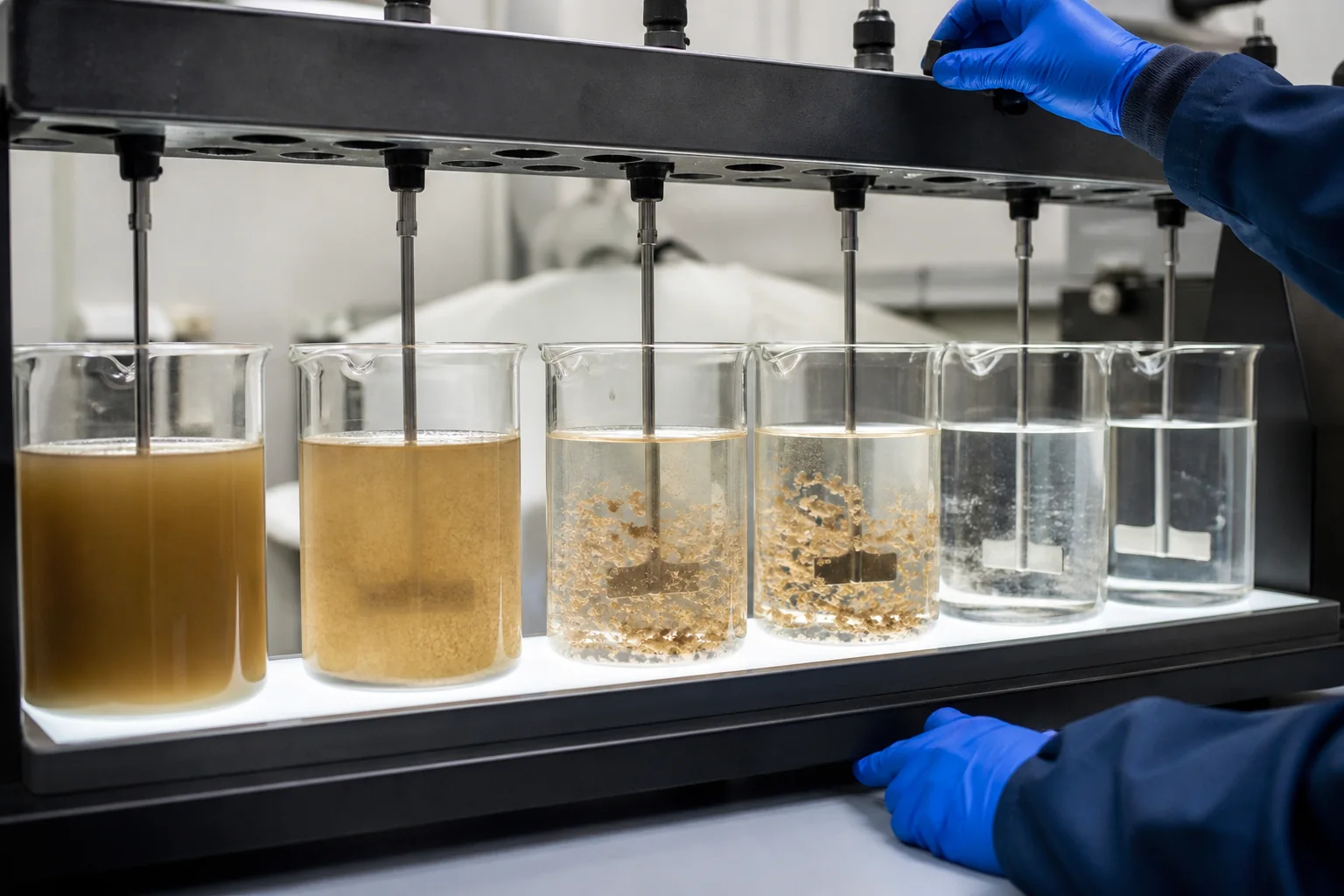
Use the dose that met the agreed water and separator targets, not the dose associated with the biggest visible floc. Compare candidates under the matched jar-test procedure and confirm the useful operating range before converting laboratory consumption into a plant budget.
Include the pH and solids consequences
Record any acid or alkali demand needed to achieve the accepted condition, together with preparation water, handling, sludge and relevant filtration effects. A lower coagulant price can be offset by higher consumption or additional correction. Avoid assigning savings to a downstream effect that the trial has not actually measured.
Keep treated-water quality and sludge handling as separate acceptance gates. A clear supernatant does not establish that filters, DAF performance, biological treatment or dewatering will remain satisfactory. Where those costs matter, include a trial duration and measurement method that can reveal them.
Align delivery and inventory scope
Compare prices at the same named delivery point, packing format and quotation date. Identify freight, unloading, container return and destination costs that are excluded. Separate sample and trial pricing from repeat-supply pricing rather than assume a bulk discount applies before technical acceptance.
Consider storage capacity and consumption uncertainty. A cheaper large order may leave unusable stock if the water envelope or production schedule changes. Match the order size to grade-specific storage guidance and a credible call-off plan.
Preserve the purchasing conclusion
The comparison sheet should show product identity, declared assay, dose basis, accepted water range, actual consumption, pH-control needs and scoped delivered cost. State which results are measured and which costs remain estimates. A normalized price calculation does not guarantee equivalent treatment.
Send water analysis, separator type, current program, trial quantity and destination through the PAC quotation brief. Request an evidence-based screening proposal before treating one price-per-tonne number as the final buying decision.
Retain a reproducible price worksheet
Use separate columns for product unit price, declared assay, calibrated product consumption and any measured correction or solids cost. Mark assumptions and leave unavailable costs blank rather than entering a zero that implies no expense.
Keep the water and trial dates beside the result. A later price review should show whether the change comes from freight, assay, dose or process conditions instead of treating every higher invoice as a chemical-performance problem.