
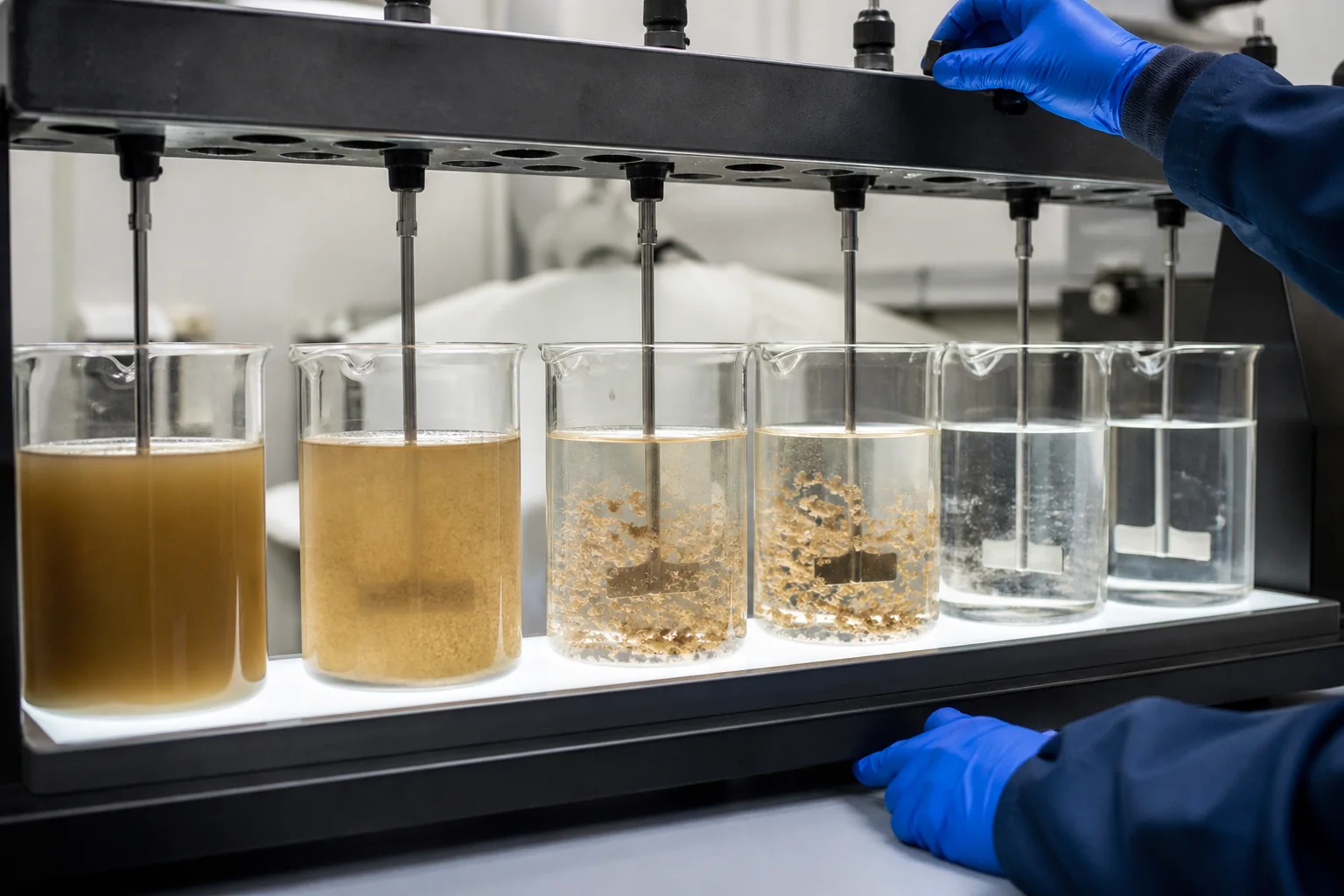
Define the operating question
State the water source, jar-test procedure and scale-up, target measurement and downstream separation step.
A product name alone cannot define a responsible treatment recommendation.
Characterize representative water
Record turbidity, color or target contaminant, alkalinity, pH, temperature and credible variability.
Use actual operating water rather than one convenient synthetic sample.
Normalize product and dose
Compare candidates on the same active aluminum or Al2O3 basis and document stock preparation.
Neat product units can hide differences between liquid and powder grades.
Reproduce mixing and time
Keep addition order, rapid mix, flocculation energy and settling time consistent.
A strong beaker result obtained with unrealistic mixing may not scale to the plant.
Measure the complete result
Track settled turbidity, pH, floc behavior and the application-specific analytical target.
Include sludge or filtration consequences where they control operating cost.
Release a bounded window
Link water, product code, lot, dose basis, mixing, measurements, COA, SDS and quotation.
Revalidate meaningful water, process or supplied-product changes.
Diagnose failure modes
Separate raw-water change, product identity, pump delivery, pH, rapid mixing, floc breakage and clarification loading.
Change one factor at a time when operations allow and preserve the baseline.
Close the purchasing record
State sample and trial quantity, monthly demand, packaging, destination, document needs and receiving checks.
The approved sample and production supply must remain traceable.
Interpret the PAC jar-test result
Prepare one homogeneous batch of representative raw water and keep it at the plant-relevant temperature. Measure the starting turbidity, pH and alkalinity before dividing the sample. Include an untreated blank, the incumbent coagulant and coded PAC candidates. Express every addition on a stated product or active Al2O3 basis so the dose ladder can be reproduced and commercial comparisons are not distorted by different product concentrations.
Use the same stock-solution age, addition sequence, rapid-mix energy, flocculation stages and settling time for every beaker. The dose series should be wide enough to reveal underdosing, a useful response window and any deterioration at the high end. Record floc onset, size, breakage and settling, but rank candidates by the treated-water measurements that matter to the plant rather than appearance alone.
Measure settled turbidity and final pH at minimum; add color, UV254, phosphorus, residual aluminum, sludge volume or filter response when those results govern the duty. A single best beaker is not an operating range. Repeat the most promising points around the apparent optimum and then challenge them with a credible difficult-water condition such as lower temperature, lower alkalinity or higher contaminant loading.
Transfer the result into a field-trial sheet that states product code, lot, water analysis, stock preparation, dose basis, mixer settings, timing, sampling points and acceptance limits. Confirm pump calibration before scale-up. Jar testing ranks candidates under controlled conditions; full-scale release still depends on the installed hydraulics, solids loading, sludge handling and downstream filtration response.
When results are close, repeat the center points in duplicate and randomize candidate labels before review. Preserve photographs only as supporting evidence and retain the raw measurement sheet. Report analytical detection limits and any sample settling that occurred before testing. These details make a later supplier comparison or seasonal retest genuinely comparable instead of relying on memory or one selected image.