
Resolve the chemical abbreviation
PAC means polyaluminum chloride in this product range. PAM means polyacrylamide. They are different chemical families and should not share an ambiguous purchase description such as flocculant powder. PAC can also mean powdered activated carbon elsewhere, so write the complete name when issuing an enquiry.
PAC is generally evaluated as a coagulant in this context, while suitable PAM grades may support floc formation or other process functions. The word polymer does not make inorganic PAC equivalent to an organic PAM grade or establish which chemical the treatment requires.
Locate the process question
Describe whether the problem is destabilizing colloids, developing separable floc, improving a solids-separation step or diagnosing a failed current program. Include water analysis, existing chemicals, mixing and separator. A trade name alone cannot identify the cause of weak treatment.
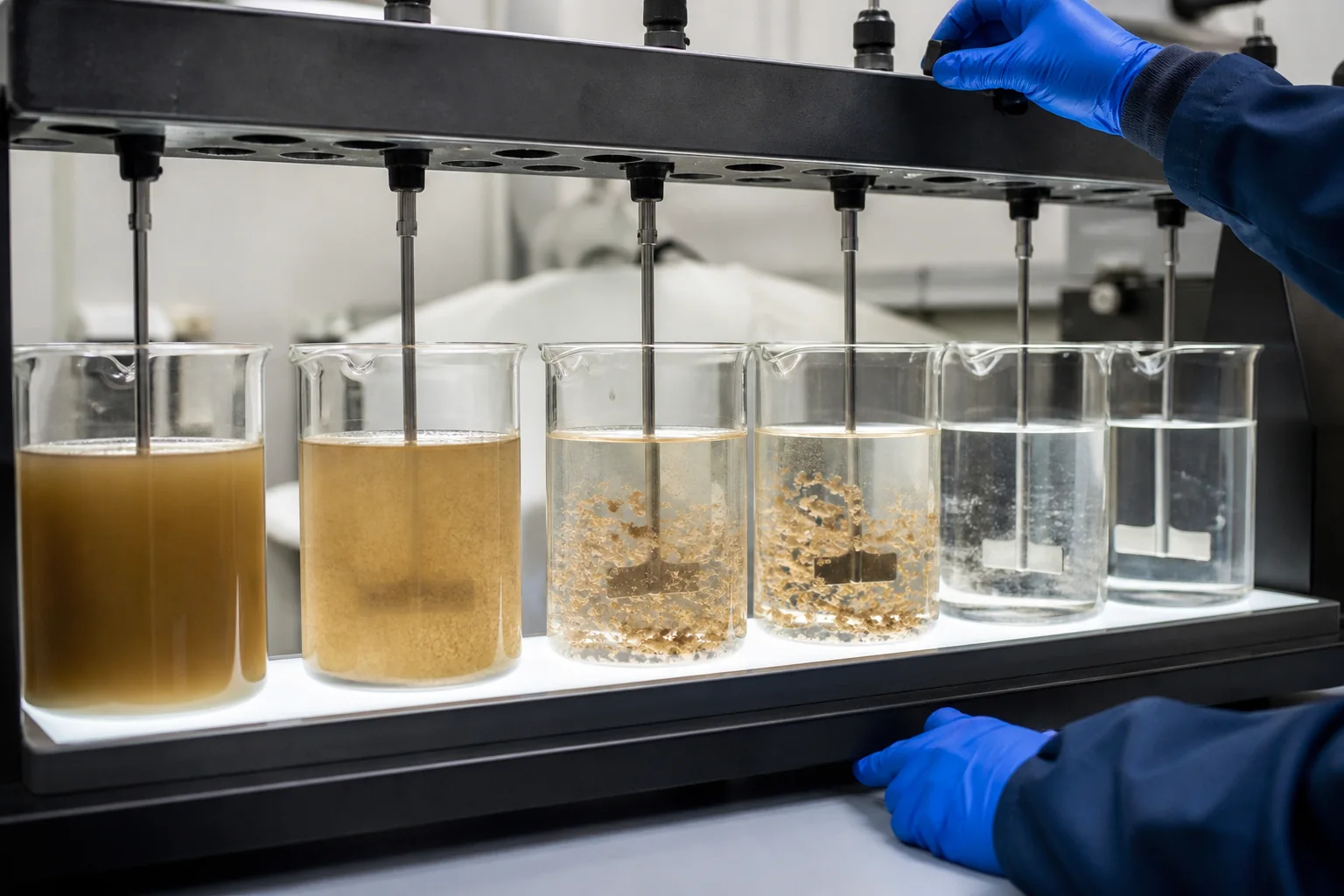
The PAC jar-test procedure helps define the coagulant comparison. If the duty needs a separate flocculant, specify that function independently rather than demand one product replace every chemical in the program.
Do not substitute product specifications
PAC procurement may focus on aluminum assay, basicity and relevant quality limits alongside application tests. PAM procurement uses a different identity and preparation framework, including the grade's ionic and solution characteristics where relevant. Neither specification sheet can be copied into an order for the other chemical.
Likewise, powder dissolution instructions for PAC do not establish PAM make-down or vice versa. Use current grade-specific guidance and installed equipment. Misidentification can produce a misleading test and a material that the receiving operation cannot handle correctly.
Evaluate single and combined treatments
Use representative water, an untreated control, the current program and appropriate candidate comparisons. Where both chemicals are proposed, preserve the actual order, contact time and mixing regime. Keep coagulant and flocculant quantities separately recorded.
A larger visible floc is not a complete acceptance result. Measure the separated water and relevant sludge, filter or flotation outcomes. The combined-program quotation guide adds the commercial controls when a supplier proposes both products.
Compare the complete accepted duty
Do not compare a tonne of PAC with a tonne of PAM as if unit mass delivered the same function. Use measured consumption within a treatment route that meets the agreed outcome. Include preparation, pH correction, handling and solids costs where they affect value.
State whether the quote is for a single chemical, two separate grades or a blended product. A blend needs its own identity, instructions and evidence; an informal instruction to mix products is not an adequate specification or a safe handling procedure.
Send an unambiguous order request
Write the chemical name, intended function, supplied form, current treatment and acceptance method. Ask the supplier to explain any recommended product-family change and how it will be evaluated. Keep the approved sample and final quoted material traceable.
Use the PAC or combined-program enquiry with water data and separator details. Buying the correct function first is more useful than choosing a familiar abbreviation or the cheapest material labelled flocculant.
Confirm the identity at receiving
Use full chemical names and separate product codes in the purchase order, packing list and stores record. Similar-looking bags or the shared word flocculant should not be the basis for selecting material at the preparation station.
Check the label against the approved preparation procedure before use. If the delivered chemical family is uncertain, hold the material for clarification rather than try the familiar make-down method and infer its identity from the resulting solution. For an alternative coagulant rather than a flocculant aid, use the PAC and ferric bid comparison.