
Specify which ferric product is offered
PAC, ferric chloride and ferric sulfate are not interchangeable product descriptions. Identify exact chemical, form, concentration basis and supplied formulation before comparing quotes. A tonne of each product does not provide equivalent chemistry, and different metal additions do not guarantee equal treatment.
The equivalent-basis comparison principles can guide the test discipline, but the PAC-versus-ferric decision needs its own water and outcome criteria rather than borrow a winner from another coagulant comparison.
Normalize without assuming equivalent performance
Record dose as supplied product and on the declared aluminum or iron basis where useful. Keep the reporting conversion transparent. Equal metal mass or molar addition may help structure screening, but it is not a claim that the chemicals must perform equally.
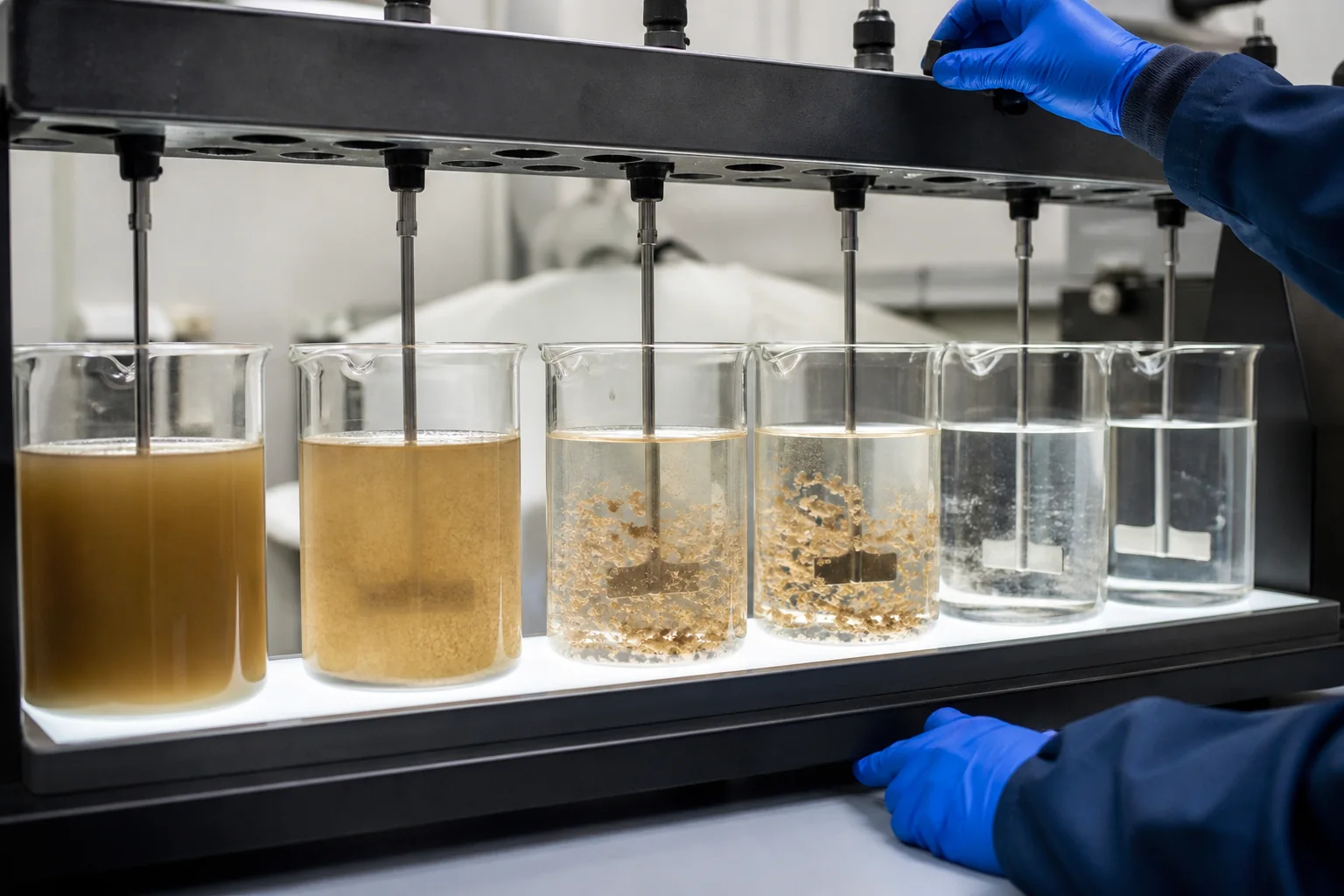
Use measured additions over a practical ladder and retain the incumbent. Match raw water, temperature, mixing and separation. If candidates require different feasible pH conditions, document that as part of the accepted treatment route rather than hide it behind one dose number.
Evaluate final pH and correction
Measure pH after the treatment sequence and include alkalinity context. Record any acid or alkali required to achieve the accepted condition. Do not infer correction cost from product name alone; actual formulation, dose and water determine the test result.
Ensure the installed plant can maintain the proposed condition. A strong laboratory removal obtained through an unavailable correction arrangement is not a practical supply alternative. Keep reagent consumption and control complexity visible in the purchasing assessment.
Measure metal and solids consequences
Choose residual aluminum or iron, color, turbidity, phosphorus or other measurements appropriate to the duty. Include sludge volume, dewatering and downstream filtration where these govern acceptance. A settled-water comparison alone may miss a meaningful difference in solids handling.
Qualified plant personnel should define any relevant operating or compliance limits. Do not interpret a generic coagulant comparison as evidence of drinking-water eligibility, environmental compliance or compatibility with every downstream process.
Compare the handling and delivery arrangement
Review current SDS and product instructions for storage, transfer and wetted-material compatibility. Ask the responsible equipment and safety teams to evaluate the proposed formulation; a similar liquid appearance does not establish an identical handling requirement.
Scope package, unloading, metering changes, storage capacity and delivery frequency. Compare delivered cost at the accepted consumption, including justified operational differences. Avoid selecting solely on an ex-works price that excludes the costs included in another offer.
Make the award application-specific
Retain the candidate identities, water window, treatment method, raw data, corrected pH, measured results and economic assumptions. State whether full-scale confirmation is complete or pending. No general rule makes PAC or ferric universally superior.
Send the current coagulant, analyses, separator, acceptance measurements and delivery needs through the coagulant comparison enquiry. Request testable PAC proposals and a transparent commercial basis rather than an unsupported cross-chemical dose substitution.
Separate metal residuals in the comparison sheet
Use distinct columns for the aluminum and iron measurements relevant to the selected duty, with methods and sample preparation. Do not put two different analytical endpoints under one generic residual heading.
Keep pH correction, sludge measurements and the delivery scope beside those results. Where an endpoint was not measured, record the gap rather than award a cost advantage based on an assumption that the downstream effect must be equivalent.