
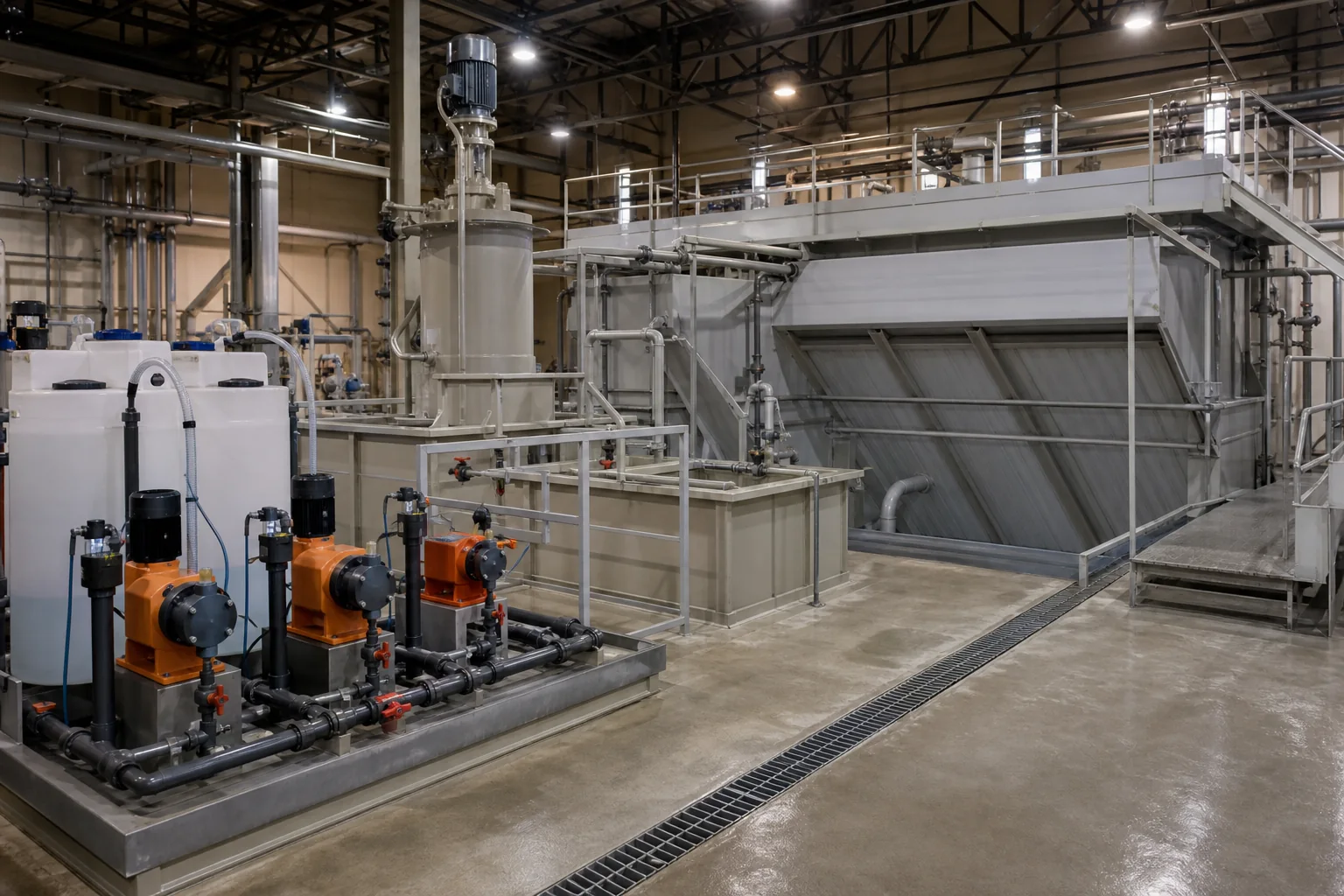
Describe the oil and the treatment train
Identify the source stream, free or dispersed oil context, detergents or emulsifiers and current upstream separation. A PAC enquiry for oily wastewater is incomplete without knowing what reaches the chemical stage. Do not assume coagulation alone resolves stable emulsions or replaces bulk free-oil separation.
The industrial treatment route should state the actual DAF duty. Include production variability and the target analytical measurement, not only a photograph of an oily sample.
Preserve a representative sample
Record sampling location, date, temperature, mixing and storage history. Oil separation, settling or aging during transport can change the fluid. Follow the laboratory's collection procedure and report the received condition instead of silently testing only a decanted water layer.
Include residual cleaners and upstream chemicals in the description. A simplified synthetic sample may help a mechanism study but should not replace the representative operating sample used for a procurement decision.
Reproduce the chemical program safely
Test the approved pH-conditioning, coagulant and any flocculant sequence with relevant mixing and contact time. Use applicable product instructions and the operator's safe procedure. Avoid direct concentrated-product mixing or an improvised chemical recipe.
Compare untreated water, the incumbent and coded PAC candidates. Keep product and normalized dose bases clear. The combined PAC/PAM quotation guide helps preserve component identities when both products are proposed.
Use flotation evidence, not settling alone
A settling jar can screen coagulation but does not fully reproduce DAF air attachment and hydraulic conditions. Use an appropriate flotation comparison and defined observation time where DAF performance governs release. Record float formation, stability, drainage and carryover as well as separated-water quality.
Measure oil, suspended solids, turbidity or other specified targets using agreed methods. A visually clean water phase cannot independently prove an oil result, and a large float layer may create handling difficulties. Keep water and solids outcomes separate.
Plan plant confirmation and economics
Define stable comparison intervals, calibrated feed and sampling around the DAF. Record flow, recycle and other relevant operating conditions under the process team's method. A field result obtained during major load or hydraulic changes may be inconclusive.
Compare delivered chemical cost at the accepted dose together with flocculant, pH correction and float handling. Include any change in downstream filter or biological loading that was actually measured. Do not assign savings from an appearance-only screening.
Send a DAF-ready purchasing brief
Provide oil-state context, current program, water analysis, DAF arrangement, target measurements, trial quantity, pack and destination. Ask the supplier to connect proposed grades to a manageable test plan and to state limitations.
Use the oily-water PAC enquiry. Approve a bounded treatment window and supply identity rather than purchase against a universal oily-water removal claim or a settling-only photograph.
Keep a float-quality receiving reference
Record the sample's oil condition, treatment sequence, flotation method, observation time and accepted water and float measurements. Preserve the package and lot identity of the PAC and any aid used in that reference.
Use the same scope when repeat supply is checked. If the plant changes detergent, upstream oil separation or DAF operating conditions, identify that process change before treating a different float appearance as evidence of a nonconforming PAC lot.